

Insights




The Invisible Tax: Why Melbourne Firms Lose Thousands to Unseen Competitors
![[HERO] The Invisible Tax: Why Melbourne Firms Lose Thousands to Unseen Competitors](https://framerusercontent.com/images/0LEmEjWAhZtxUK3e55Faq5N4Y1Q.webp)
Every week, a Melbourne firm loses an enquiry to a competitor they didn't even know existed. The prospect searches "SMSF accountant Richmond" or "property lawyer near me", scans the Google Maps results, makes a decision in under 30 seconds, and moves on. Your firm never appeared. You never had a chance. This isn't about better marketing. It's about being visible when it matters. If you're not showing up in local search results when high-intent buyers are looking, you're paying an invisible tax: lost revenue, handed directly to digitally visible competitors.
The Problem: You're Losing Before the Race Starts
Here's the reality for most professional service firms in Melbourne: you're good at what you do. Your clients love you. But when someone in Essendon searches "BAS agent near me" or "family lawyer Box Hill", your firm doesn't show up in the top three Google Maps results. You don't appear in the Local 3-Pack. You're not even on page one. So the prospect calls someone else. They book a consultation with a firm that might be less experienced, less credible, and less qualified than you. But they were visible. You weren't. This happens every single day. The invisible tax isn't what you spend on marketing. It's the revenue you never see because you don't exist in the buying moment.
The Strategy: Visibility Infrastructure, Not One-Off Campaigns
Most firms treat local visibility as a marketing campaign. They run some Google Ads, post on LinkedIn a few times, and maybe update their website. Then they wonder why the phone isn't ringing. The problem is structural, not tactical. If you want to stop paying the invisible tax, you need to build visibility infrastructure. That means owning your position in the high-intent moments when people are actively looking to hire. It starts with your Google Business Profile. This is your storefront in local search. If it's incomplete, outdated, or poorly optimised, you're invisible. Next is your website. Can someone land on your homepage and immediately understand what you do, who you serve, and why they should enquire? If not, you're leaking leads. Finally, reviews and trust signals. If a prospect sees your GBP listing but you have three reviews (two from colleagues), they're moving on. Visibility infrastructure is about stacking these elements so you win the pre-vetting phase before a prospect even contacts you.
Implementation: Three Systems to Stop the Leak
1. Google Business Profile Optimisation
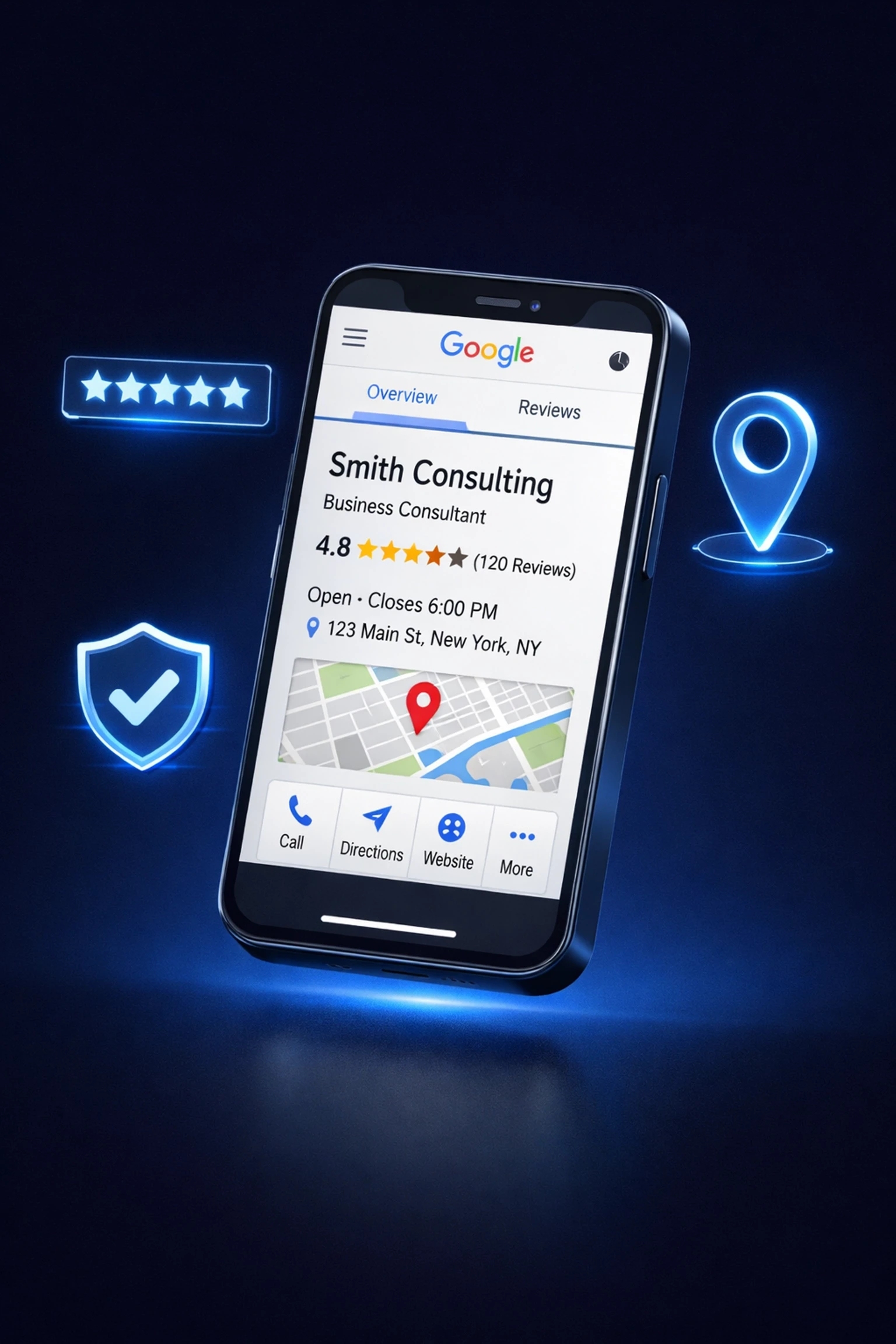
Your GBP is the single highest-leverage asset for local visibility. Start by claiming and fully completing your profile. Add your primary and secondary service categories (e.g., "Tax Consultant", "Business Management Consultant"). Upload high-quality photos of your office, team, and any client-facing spaces. Write a detailed business description using the exact terms prospects search for: "SMSF advice", "CGT planning", "property settlement". Update your services list to match high-intent queries. Check your NAP consistency (Name, Address, Phone) across all directories. If your GBP says "Suite 3" but your website says "Level 3", Google can't confidently rank you. This isn't glamorous work, but it's the foundation.
2. High-Intent Landing Pages
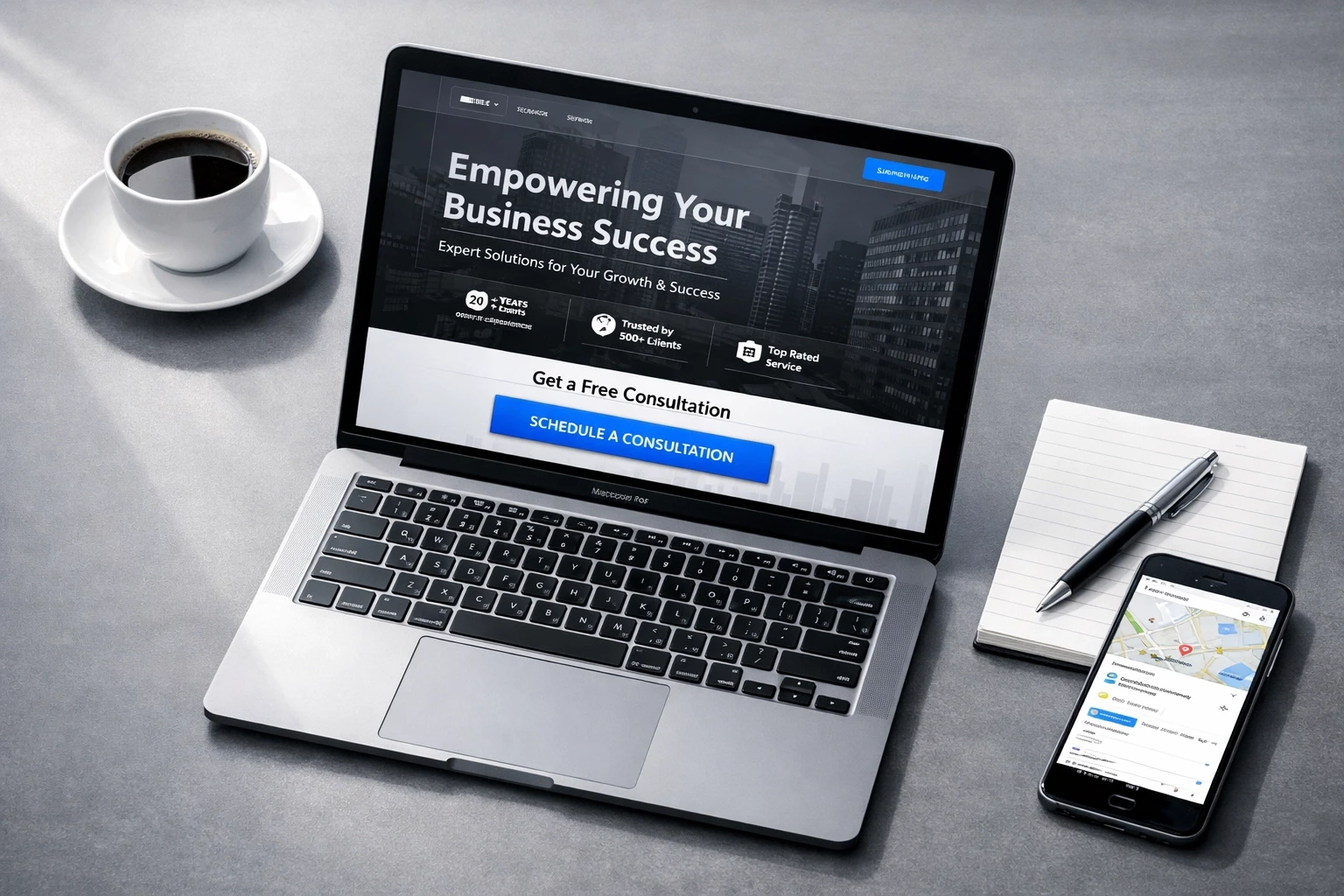
Your homepage can't do everything. If someone searches "business succession planning Hawthorn", they need to land on a page that immediately validates their search. Create service-specific landing pages for every high-value offering. Use clear H1 titles like "SMSF Accounting Services in Richmond" or "Commercial Lease Advice, Box Hill". Include trust signals: testimonials, case study snippets, credentials. Make the next step obvious: "Book a 20-Minute Consultation" or "Request a Fixed-Fee Quote". These pages should load fast, look professional on mobile, and remove friction. If a prospect has to hunt for your phone number or guess what you charge, they're gone. Every high-intent page is a conversion checkpoint.
3. Review Velocity Systems
Review volume and recency are ranking signals in local search. But most firms wait for reviews to happen organically. That's too slow. Set up a systematic review generation process. After a successful matter closes or a client expresses satisfaction, send a simple email or SMS asking for a Google review. Make it easy: include a direct link to your GBP review page. Track your review velocity (how many new reviews per month) and compare it to competitors in your category. If they're getting two reviews a week and you're getting two a year, you're invisible by comparison. This isn't pushy. It's a professional infrastructure.
The Bottom Line: Visibility Is a System, Not a Campaign
The invisible tax isn't going away unless you build the infrastructure to eliminate it. You can't control who searches for your services. But you can control whether you show up when they do. Google Business Profile optimisation, high-intent landing pages, and systematic review generation are not optional extras. They're the baseline for staying visible in 2026. If you're losing enquiries to firms you've never heard of, it's because they built this infrastructure and you didn't. The good news? You can start today. The alternative is continuing to pay the invisible tax, one lost client at a time.
If you want to see exactly where you're leaking leads and what to fix first, we can map it in 30 minutes. Book your Digital Growth Diagnostic & Action Plan and get a clear, prioritised fix-first roadmap. No fluff, no 40-page PDFs. Just the infrastructure gaps are costing you enquiries right now.