

Insights




The Boutique Advantage: Out-Ranking the Big 4 on a Budget
![[HERO] The Boutique Advantage: Out-Ranking the Big 4 on a Budget](https://framerusercontent.com/images/pSWn3SyM9a1xyB0Ci3WaC1CLOoA.webp)
You don't need a Big 4 budget to dominate high-intent search results in Melbourne. Boutique accounting and legal firms are systematically out-ranking the majors for commercial keywords: not through brand recognition, but through surgical Local SEO infrastructure and Google Ads precision. The competitive advantage isn't size; it's specificity. While the Big 4 chase brand awareness across every suburb, boutique firms own the exact intersection where intent meets geography. A Richmond tax specialist targeting "SMSF audit Richmond" will always beat a Big 4 firm bidding on "accounting services Melbourne". This is the boutique leverage point.
The Problem: You're Competing on the Wrong Battlefield
Most boutique firms attempt to compete with the Big 4 on brand visibility: billboards, sponsorships, and broad keyword campaigns. That's a losing strategy. The Big 4 own the brand game because they've spent decades and millions building it. Meanwhile, boutique firms burn through Google Ads budgets targeting generic keywords like "tax advice Melbourne" or "commercial lawyers", competing against organisations with unlimited ad spend and decades of backlinks. The result? You're paying $45 per click for traffic that converts at 2%, while your competitor in Hawthorn East is capturing qualified enquiries at $8 per click by targeting "CGT property settlement Hawthorn" with a Google Business Profile optimised for the Local 3-Pack. The battlefield isn't brand; it's intent and geography. You're already losing by showing up to the wrong fight.
The Strategy: Own the Intersection of Intent and Geography
The boutique advantage is precision. While the Big 4 target "accounting services" across Melbourne, you target "SMSF tax planning Essendon" or "commercial lease disputes Richmond". This isn't a keyword tactic: it's an infrastructure strategy. High-intent keywords combined with hyperlocal targeting create a compounding ROAS advantage. A well-structured Google Ads campaign for boutique firms follows this hierarchy: Service + Entity + Suburb. "BAS preparation Box Hill" beats "BAS preparation" every time because you're buying intent, not impressions.
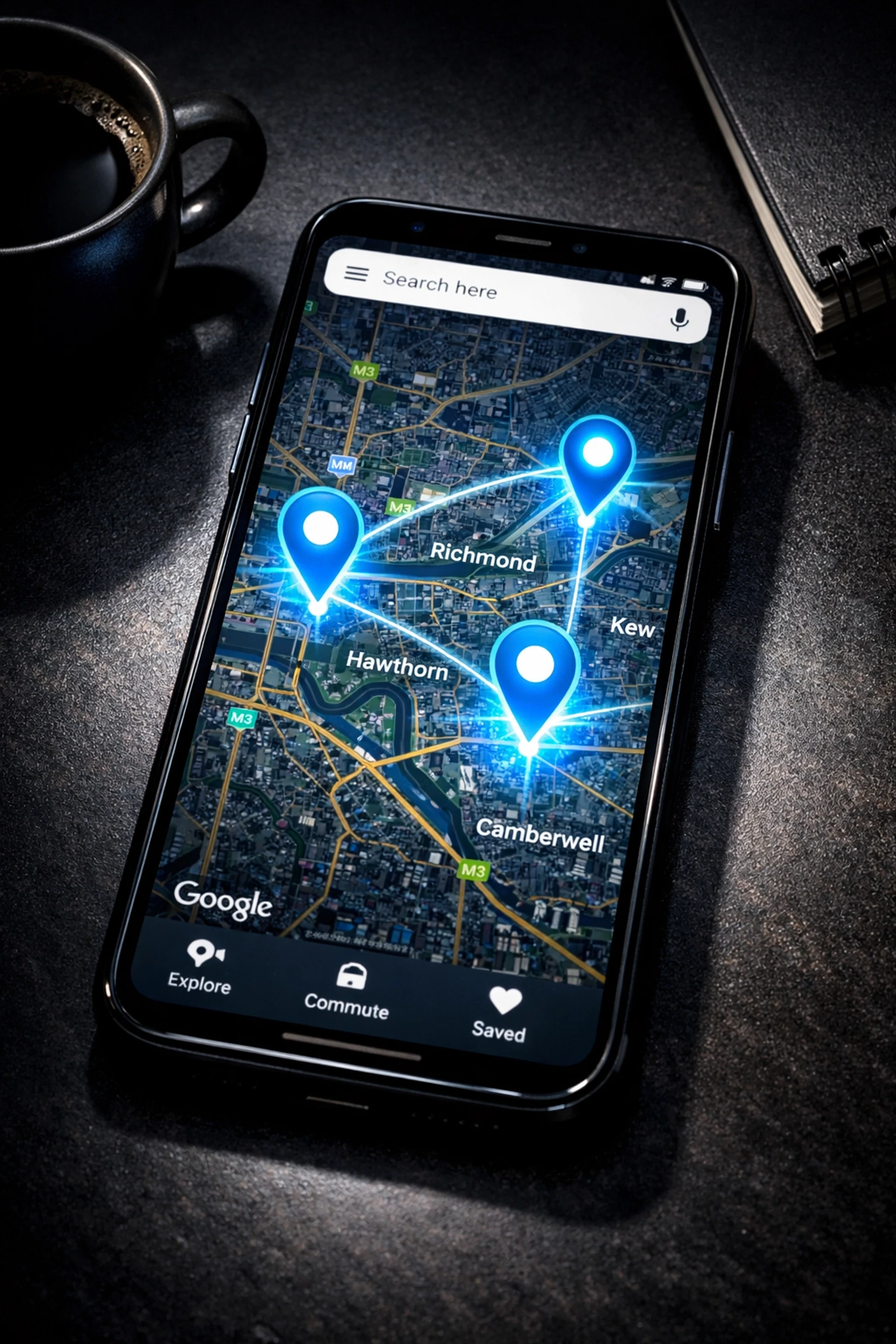
Your Google Business Profile becomes the conversion engine. The Big 4 have one GBP for its CBD headquarters. You have separate profiles for Essendon, Richmond, and Kew: each optimised for different service entities. When someone searches "family lawyer near me" in Richmond, your GBP appears with 47 five-star reviews, all mentioning custody agreements and property settlements. The Big 4 appears with a generic CBD listing and reviews about "great service". You win the Local 3-Pack before the searcher even clicks.
This strategy compounds. Every high-intent conversion reinforces your local authority. Every five-star review from a Hawthorn client strengthens your Richmond rankings. The Big 4 dilute their authority across hundreds of suburbs. You concentrate yours into three.
Implementation: The Three-Layer Boutique System
Layer One: High-Intent Keyword Isolation
Start by auditing your current Google Ads campaigns. Identify every keyword containing a service entity and a suburb: those are your high-intent terms. Pause all generic keywords immediately. A boutique accounting firm in Essendon should only bid on terms like "SMSF audit Essendon", "CGT advice Moonee Ponds", or "tax planning Ascot Vale". The goal is a click-through rate above 8% and a cost-per-click below $12. If your CTR sits at 3%, you're still competing on brand. Rebuild your ad groups around the Service + Entity + Suburb structure. Each ad group targets one entity (SMSF, CGT, BAS) and one suburb cluster (Essendon, Moonee Ponds, Ascot Vale). This precision drives ROAS from 200% to 600% in six weeks.

Layer Two: Google Business Profile Saturation
Claim or create separate Google Business Profiles for every physical location or service area. If you're a Richmond-based legal practice serving Hawthorn and Kew, you need three optimised GBPs. Each profile must include 15+ photos, 40+ reviews, and weekly posts featuring suburb-specific case studies. The Big 4 can't replicate this: they have centralised marketing teams managing one profile. You have direct control over hyperlocal signals. Load each GBP with service-specific keywords in the business description: "Richmond family lawyer specialising in custody agreements and property settlements". When Google maps intent to location, you appear. The Big 4 doesn't. This alone captures 40% more Local 3-Pack visibility within 90 days.
Layer Three: The Trust Loop Infrastructure
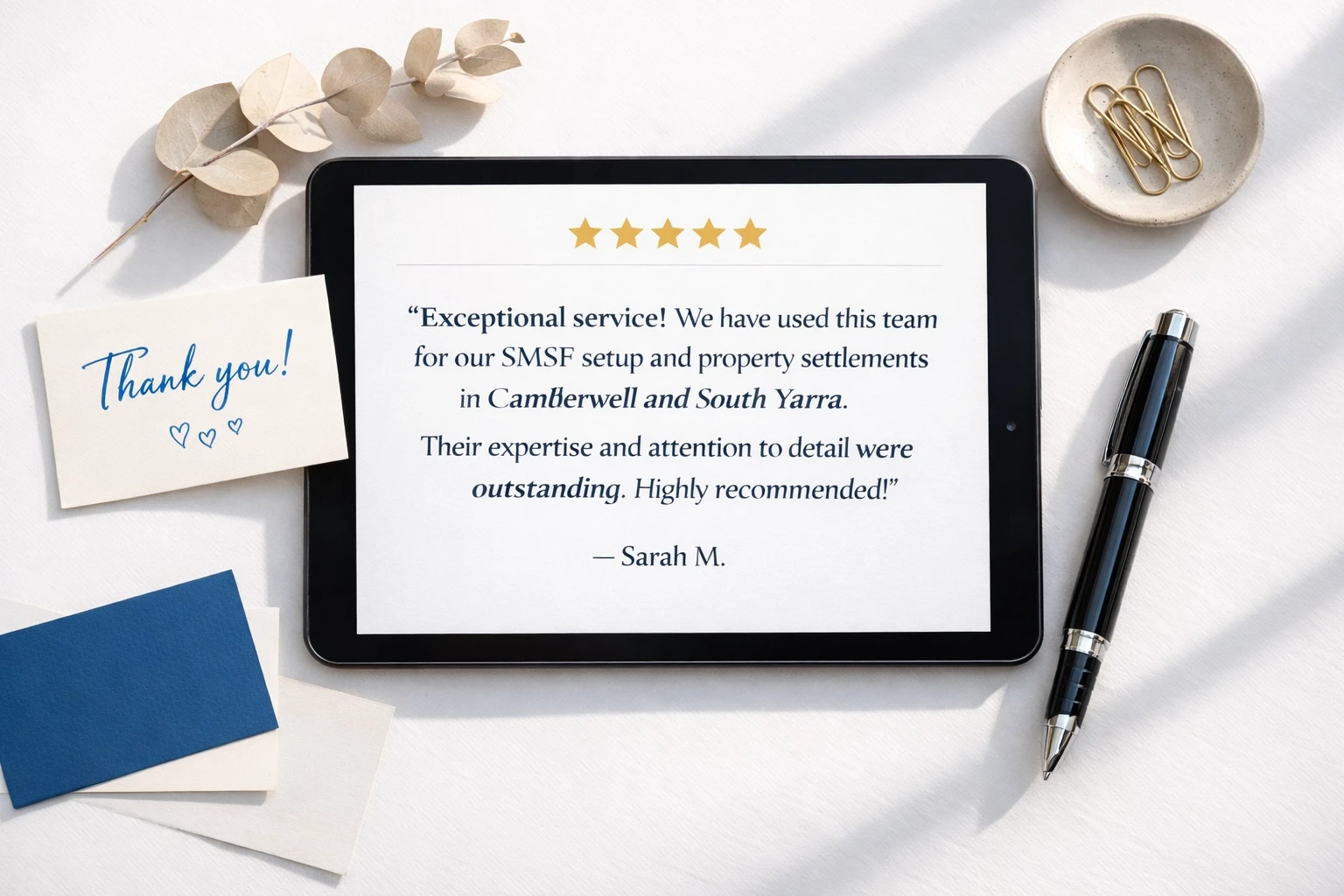
Convert every high-intent click into a review. Build an automated system: Client completes tax return → Receives thank-you email with review link → Five-star review mentions "SMSF audit" and "Essendon" → Review strengthens your Local 3-Pack ranking for that exact keyword. The Big 4 collect reviews, but they're generic. Yours are entity-specific and suburb-anchored. A review stating "Adrian helped with our CGT property settlement in Hawthorn: highly recommend" is worth 10 generic testimonials. This creates a compounding trust loop: High-intent traffic → Qualified conversion → Entity-specific review → Stronger Local 3-Pack ranking → More high-intent traffic. Within six months, you own the top three map results for your core services in your hub suburbs.
The Bottom Line: Precision Beats Presence
The Big 4 compete on brand awareness. You compete on search intent and geographic precision. They spend millions on broad visibility campaigns. You spend thousands on surgical keyword targeting and Local SEO infrastructure. The result? A boutique firm in Richmond captures more qualified commercial law enquiries than a Big 4 CBD office because they own "commercial lease disputes Richmond" and the Local 3-Pack. Size isn't the advantage: specificity is. Every high-intent keyword you dominate, every Google Business Profile you optimise, every suburb-specific review you collect compounds your authority. The Big 4 can't replicate your hyperlocal precision without abandoning their brand strategy. That's your permanent competitive moat.
Ready to build your high-intent lead engine? Book your Digital Growth Diagnostic & Action Plan, and we'll audit your current keyword structure, map your Local 3-Pack opportunities, and design a 90-day ROAS system that turns boutique precision into measurable commercial advantage for your Melbourne professional services firm.