

Insights




The Anti-Click Strategy: Why Google Ads for Consultants Usually Fail
![[HERO] The Anti-Click Strategy: Why Google Ads for Consultants Usually Fail](https://framerusercontent.com/images/JmPYnEr1DY0Ka0HTeBlvJCb1KU.webp)
You're paying $3,200 a month. The dashboard shows 847 clicks. Your inbox has three enquiries: two from time-wasters, one genuine prospect who went quiet after the discovery call. The Google Ads rep says your click-through rate is "excellent." Your accountant says you've spent $19,000 in six months with two signed clients to show for it. The platform isn't broken. Your strategy is. Most consultants optimise for clicks when they should be engineering friction. High-intent leads don't need convincing: they need filtering. Here's why your Google Ads are hemorrhaging budget and how to fix it.
The Problem: You're Optimising for the Wrong Conversion Event
Your Google Ads campaign treats every click like a win. It isn't. A Richmond management consultant running "business strategy Melbourne" is paying $47 per click to attract business owners Googling vague aspirations: not buying signals. The algorithm rewards clicks, so it serves ads to anyone showing mild curiosity. You get traffic. You don't get billable hours. The economics are brutal: if your average engagement is worth $18,000 and your close rate is 15%, you need qualified conversations, not cold browsers clicking because your ad mentioned "growth." The platform optimises for engagement. You need ROAS measured in signed retainers, not sessions. That's the gap killing your campaign. Every unqualified click costs you twice: once in ad spend, once in time spent vetting leads who were never going to convert.
The Strategy: Engineer Friction to Filter for Intent
The fix isn't better ads. It's strategic resistance. High-intent buyers: CEOs in Essendon facing a liquidity crisis, Box Hill manufacturers planning a sale: don't need to be sold. They need to self-qualify. Your Google Ads architecture should repel tire-kickers and attract decision-makers who've already done their research. Start with search intent layering: target phrase-match keywords tied to specific pain points ("fractional CFO for EBITDA improvement," "exit planning consultant Melbourne"), not broad terms. Add negative keywords aggressively: exclude "free," "DIY," "training," "course." Set geographic targeting to high-value postcodes: 3121 (Richmond), 3040 (Essendon), 3128 (Box Hill). Then build a landing page that asks for commitment: require a phone number, include your fee structure upfront, and embed a 60-second video explaining your vetting process. Make the form longer, not shorter. Qualified leads will complete it. Browsers will bounce. That's the goal. Your cost-per-click might rise, but your cost-per-qualified-lead will plummet. You're not buying traffic anymore: you're buying pre-vetted conversations.
How to Build the Anti-Click Infrastructure
Step 1: Audit and Restructure Your Keyword Architecture
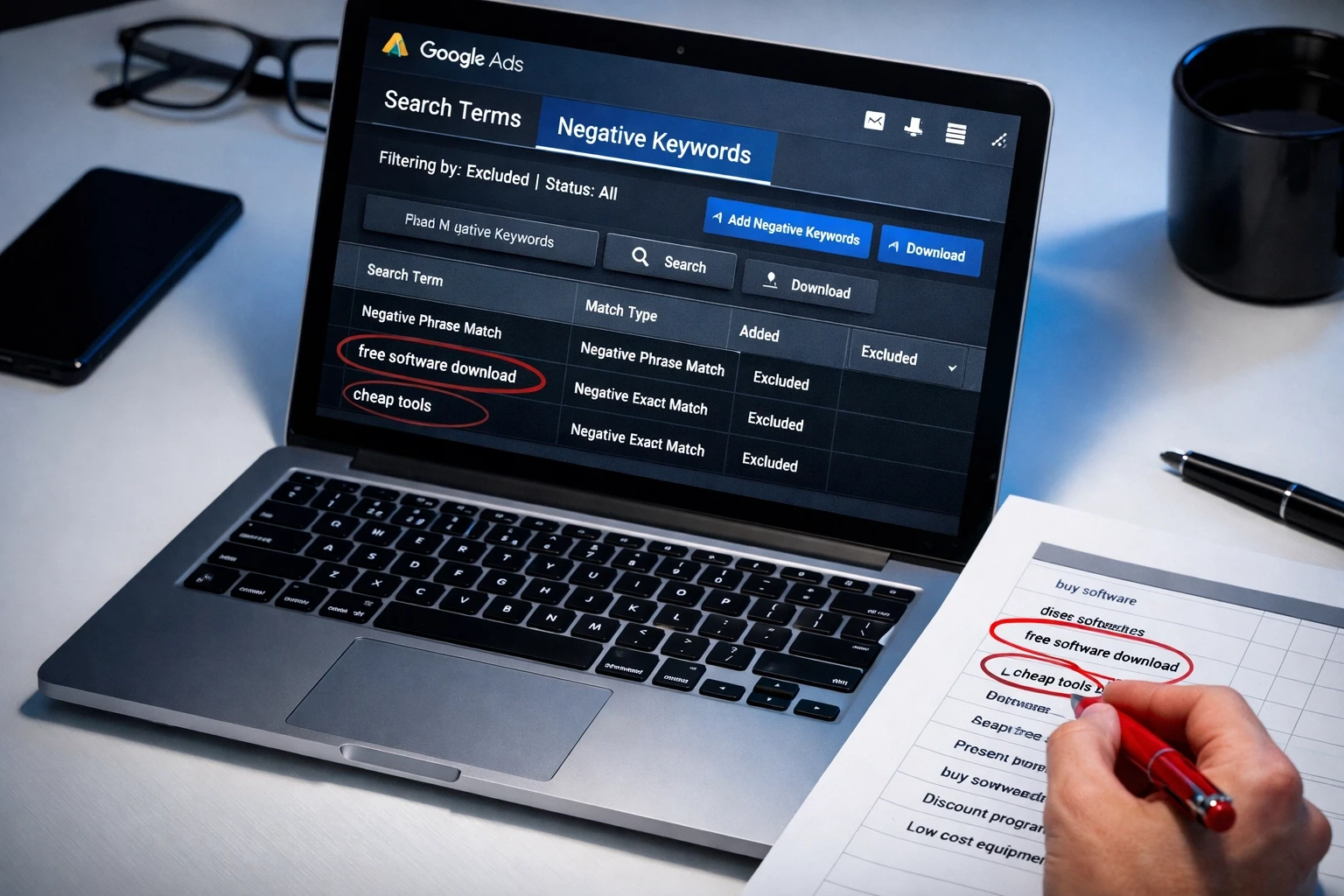
Open your Google Ads account and export your search terms report for the last 90 days. Identify every query that generated a click but no enquiry. Add them as negative keywords immediately. Rebuild your campaigns around buyer-intent phrases: terms that signal a decision has already been made. Examples: "hire management consultant Melbourne," "business turnaround specialist," "pre-sale valuation advisory." Eliminate single-word keywords. Use phrase match, not broad match. Set your geographic radius to 15km around your target suburbs. This isn't about reach; it's about precision. A consultant in Richmond doesn't need clicks from Dandenong. You're building a filter, not a funnel.
Step 2: Rebuild Your Landing Page as a Qualification Tool
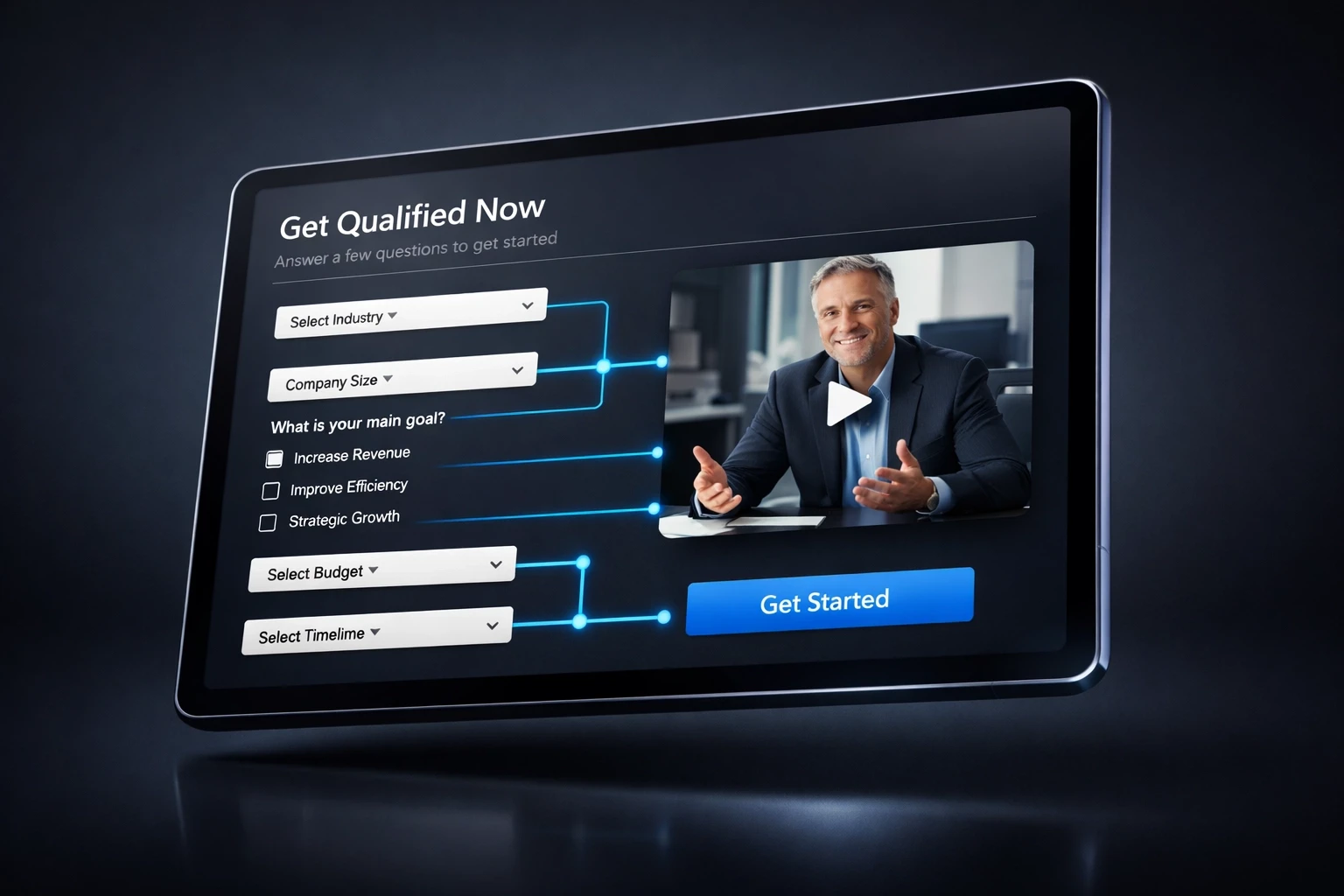
Your landing page should feel like a consultation, not a pitch. Remove generic "Contact Us" forms. Replace them with a diagnostic questionnaire: "What's your annual revenue?" "What's the primary challenge you're facing?" "What's your timeline for engagement?" Include your typical fee range prominently: if someone balks at $5,000–$15,000 for a strategy engagement, they're not your client. Add social proof specific to your niche: case studies with EBITDA improvements, testimonials mentioning billable outcomes, and logos of recognisable clients. Embed a 60-second video where you explain your vetting process and typical client profile. Make it clear: you're selective. This isn't for everyone. Qualified buyers will respect the rigour. Everyone else will leave. Perfect.
Step 3: Set Bidding to Value, Not Volume
Switch your bidding strategy from "Maximise Clicks" to "Target ROAS" or manual CPC with conversion tracking properly configured. Define a conversion as a qualified enquiry: not a form submission. Integrate your CRM so Google Ads can see which leads turned into signed clients and optimise accordingly. Set a target cost-per-acquisition based on your average engagement value: if your typical retainer is $18,000 and you close 20% of qualified leads, you can afford to pay $500–$800 per qualified enquiry and still achieve 5:1 ROAS. Increase bids on high-intent keywords. Decrease bids on exploratory terms. Let your cost-per-click rise if it means your cost-per-client drops. You're playing a different game now: one where friction is a feature, not a bug.
The Bottom Line: Clicks Are Noise. Qualified Enquiries Are Signal.
Google Ads for consultants fails when you optimise for the wrong outcome. Broad targeting, low-friction landing pages, and volume-based bidding attract curiosity: not commitment. The fix is strategic resistance: tighter geographic targeting, buyer-intent keywords, qualification-heavy landing pages, and ROAS-focused bidding. You'll get fewer clicks. You'll get better clients. A Richmond consultant spending $2,400/month with eight qualified enquiries will outperform an Essendon firm spending $4,800 with 47 unqualified clicks every time. The math is simple: billable hours per dollar spent. Everything else is a distraction. Stop chasing traffic. Start engineering conversations with people who are ready to sign.
Ready to fix your Google Ads strategy? Book your Digital Growth Diagnostic & Action Plan: we'll audit your current campaigns, identify waste, and build a high-intent lead generation system designed for professional services. Forty-five minutes. Ninety-nine dollars. Let's turn clicks into contracts.